Mercedes Dashboard Warning Lights: The Complete Guide to Every Symbol & What to Do
Modern Mercedes dashboards can display dozens of warning lights. Here is a complete guide to what every symbol means, which ones require you to stop immediately, and the Mercedes-specific warnings that are unique to the brand.
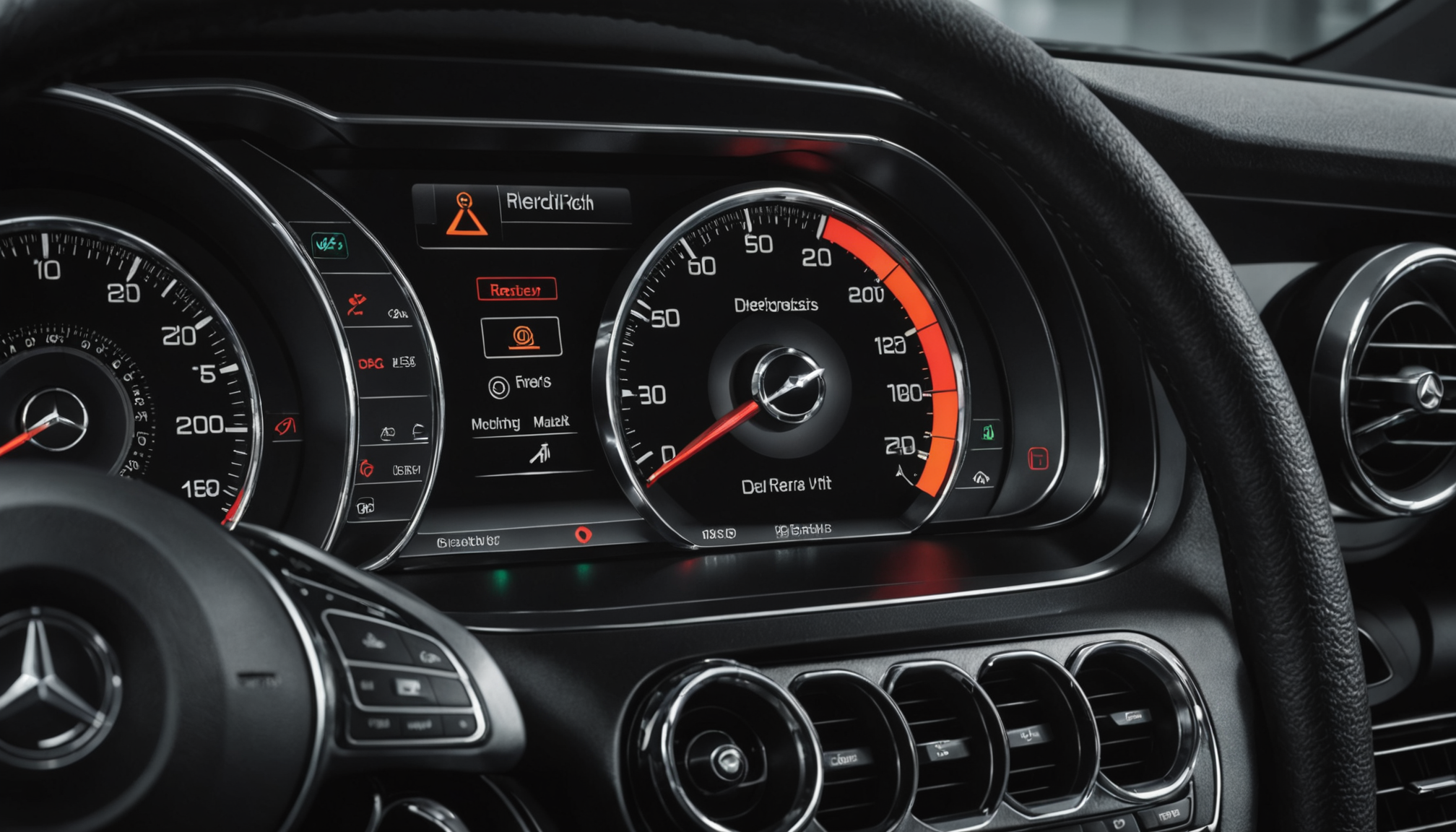
Red, yellow, white: the hierarchy of urgency
Mercedes warning lights follow a three-tier system. Red lights indicate a serious fault that requires immediate attention — in many cases you should stop driving as soon as it is safe. Yellow/amber lights indicate a fault that needs attention but is not immediately dangerous — you can continue driving but should book a diagnostic appointment. White or blue lights are informational — they indicate that a system is active (e.g. high beam, cruise control) and do not indicate a fault. The colour system is consistent across all modern Mercedes and is designed to be intuitive: if it is red, treat it like a red traffic light. If you see a red warning light while driving, reduce speed, find a safe place to stop, and assess the situation. A red battery light means the alternator is not charging — you have perhaps 10–20 minutes of battery power remaining before the engine stops. A red oil pressure light means stop immediately — running an engine without oil pressure causes irreversible damage within seconds to minutes.
2. Safety-critical red lights: stop now
Engine oil pressure (red oil can): Stop immediately and switch off the engine. This is one of the few lights that genuinely requires you to stop where you are, not drive to the next exit. Running an engine without oil pressure destroys bearings within seconds. Check the oil level; if it is normal, the oil pump or pressure sensor has likely failed and the car needs recovery. Brake system warning (red circle with exclamation mark): Could indicate low brake fluid, a major brake system fault, or that the parking brake is engaged. Check the parking brake first. If it is released and the light remains on, the brake fluid level may be critically low — do not drive. Coolant temperature (red thermometer): The engine is overheating. Stop safely, switch off, and allow the engine to cool before checking the coolant level. Do not open the expansion tank while the engine is hot — pressurised coolant can cause serious burns. Battery/charging (red battery): The alternator has failed. You have limited time before the battery drains and the engine stops. Drive directly to a garage if it is very close; otherwise, call for recovery. Power steering failure (red steering wheel): You have lost power assistance. The steering will be extremely heavy, particularly at low speeds. Drive slowly to a safe place. Airbag/SRS (red airbag): The supplementary restraint system has a fault. The airbags may not deploy in a collision. This is an MOT fail and should be diagnosed promptly — but you can continue driving.
3. Mercedes-specific warnings
AdBlue countdown: "AdBlue: starts not possible in X miles." This is the most stressful warning unique to Mercedes. It is triggered by an SCR system fault, not just low AdBlue. Do not ignore it — when the countdown reaches zero, the car will not restart until the fault is fixed. Book a diagnostic at a Mercedes specialist. SBC warning (W211/W220): "SBC — service brake — visit workshop." This indicates the Sensotronic Brake Control unit has reached its service counter limit. The brakes still work but the warning is an MOT fail. Airmatic/ABC: "Vehicle too low" or "Airmatic — visit workshop." The air suspension has a leak or the compressor has failed. The car may drop onto its bump stops, making it undriveable. Continued driving with a failed compressor can damage the valve block. Gearbox "F": A red gear symbol with "F" displayed instead of the gear position means the gearbox is in limp mode — usually locked in 2nd gear. Drive slowly to a specialist.
4. Yellow lights: book a diagnostic, but not an emergency
Check engine light (yellow engine symbol): The most common warning. A steady light means a non-critical emissions fault; a flashing light means a misfire that could damage the catalytic converter. Book a diagnostic within a few days. DPF warning (yellow filter symbol): The diesel particulate filter is approaching its soot loading limit. Take the car for a 20-minute motorway drive to allow passive regeneration. If the light persists, book a forced regeneration. Tyre pressure (yellow tyre cross-section): One or more tyres are below the recommended pressure. Check and inflate all tyres. If the light returns quickly, you have a slow puncture. ESP/ABS (yellow triangle with arrow): The stability control or anti-lock braking system has a fault. The car is still drivable but without ESP intervention in an emergency. Often caused by a failed wheel speed sensor (£80–£150). Glow plug (yellow coil): Diesel preheating system. If it flashes while driving, a glow plug or the relay module has failed — not urgent but should be addressed before cold weather. Service indicator (spanner): A service is due. The car will tell you which service (A or B) and the remaining mileage/days. AdBlue level (yellow fuel-pump symbol): AdBlue is getting low. Refill before the countdown appears — once the countdown triggers, a simple refill may not clear it.