Mercedes SCN Coding Explained: Why It Matters & What Happens When It Is Not Done
SCN coding is the most misunderstood aspect of modern Mercedes repair. If a module has been replaced on your car and not SCN-coded, it will not work properly — regardless of whether it is a genuine part.
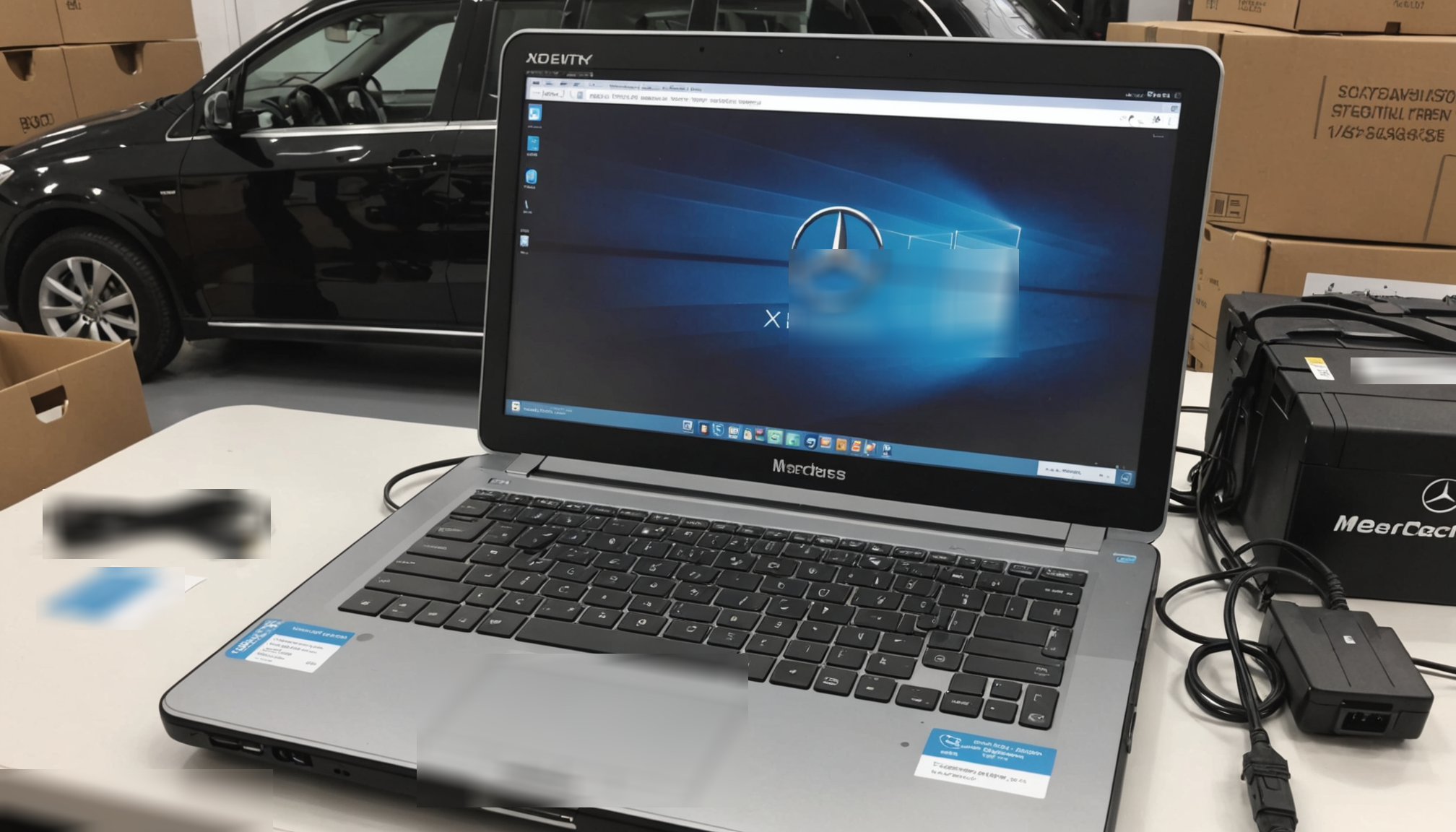
What SCN coding actually is
SCN (Software Calibration Number) coding is the process by which a replacement electronic control unit is programmed with the exact software parameters for your specific vehicle, identified by its VIN. Mercedes maintains an online database of every control unit configuration for every car it has ever built. When a new module is fitted — an engine ECU, ABS pump, steering column module, ignition switch, or even a reversing camera — it arrives from the factory with generic software. SCN coding downloads the VIN-specific calibration data from the Mercedes servers via an authorised Xentry connection and writes it to the module. Without this step, a brand-new genuine Mercedes module will either refuse to work at all or will operate with incorrect parameters, potentially causing further faults. SCN coding is not optional — it is the difference between a repair that works and a repair that creates new problems.
2. Which repairs require SCN coding
The most common repairs that require SCN coding are: replacement ignition switch (EIS/EZS) — the car will not recognise the key without coding. Replacement engine ECU — the car will not start. Replacement ABS/ESP pump — the braking parameters are VIN-specific. Replacement steering column module — indicator and wiper functions will not work correctly. Injector coding (diesel) — each injector has a unique calibration code that must be programmed into the ECU. Replacement head unit (COMAND/Audio20) — the MOST fibre-optic ring configuration must be coded. Retrofit activation — enabling features like a reversing camera, Apple CarPlay (on compatible units), or heated steering wheel requires coding the relevant module to recognise the new hardware. Key programming — a new key must be coded to the EIS/EZS and the engine ECU.
3. What happens when SCN coding is skipped
The consequences range from annoying to dangerous. A non-coded steering column module will have non-functioning or intermittent indicators — an MOT fail and a safety issue. A non-coded ABS pump may apply incorrect braking force to individual wheels — a genuine safety risk. A non-coded engine ECU may run with incorrect fuel and timing maps, causing poor performance, increased fuel consumption, and potential engine damage. A non-coded injector will be injecting the wrong quantity of fuel into that cylinder. The takeaway: if a garage replaces a module on your Mercedes and does not mention SCN coding, they either do not have Xentry access or do not understand the vehicle. Either way, find a different garage.
4. DIY coding and clone tools: the risks
The internet offers "clone" Xentry systems and "pass-thru" devices that claim to perform SCN coding. Some can, but the results are inconsistent because Mercedes regularly updates its online coding security. An unauthorised coding session can lock a module permanently, requiring a new genuine module to be fitted and coded by an authorised Xentry subscriber. This turns a £200 coding job into a £1,000+ module replacement. The cost of proper SCN coding at an independent specialist with a genuine Xentry subscription is £85–£200 depending on the module and complexity. It is not worth risking a cloned system to save £50.
5. How to verify coding was done correctly
After any repair involving module replacement or coding, ask the garage to show you the coding confirmation on Xentry. The system logs every coding session against the VIN, and a reputable specialist will be happy to print or show you the confirmation. If the repair invoice simply says "module replaced" without mentioning coding, ask specifically whether SCN coding was performed. A garage that cannot answer that question confidently should not be working on your Mercedes.
What happens during an SCN coding session
An SCN coding session connects Xentry to the Mercedes-Benz online servers via a secure internet connection. The technician enters your VIN, selects the module to be coded, and Xentry downloads the VIN-specific calibration data from the Mercedes database. The data is written to the module, and the module's software is verified against the database. The entire process is logged — Mercedes records every coding session against the VIN, which means the coding history is traceable if there is ever a warranty or insurance dispute involving a replaced module. Unauthorised "clone" Xentry systems that attempt SCN coding are detected by the Mercedes servers and the coding session is blocked — the module may be left in an incomplete programming state, which can permanently disable it. This is why we caution against using clone tools to save £50 on coding: the risk of bricking a £500–£1,000 module is real.
Injector coding: a specific and common SCN application
Diesel injector coding is one of the most frequent SCN coding jobs. Each piezo-electric injector has a unique calibration code (typically a 6–8 character alphanumeric code) engraved on the injector body. When a new injector is fitted, this code must be entered into the engine ECU via SCN coding so the ECU can adjust the injector's pulse width and timing to match its specific flow characteristics. Fitting a new injector without coding it causes incorrect fuelling in that cylinder — too rich or too lean — leading to rough idle, increased smoke, and potential DPF damage. The coding process takes 10 minutes per injector and adds approximately £30–£50 to the cost of injector replacement. Always confirm injector coding is included when quoted for an injector replacement. The calibration code is printed on the injector body and should be recorded on your invoice for future reference.