Mercedes Diesel Emissions MOT Fail: What Actually Happened & How to Prevent It Next Time
The DVSA tightened diesel emissions testing in 2018, and Mercedes diesels — particularly those driven on short urban journeys — are failing more often than ever. Here is why and how to make sure yours passes.
The DVSA diesel MOT changes: what changed in 2018
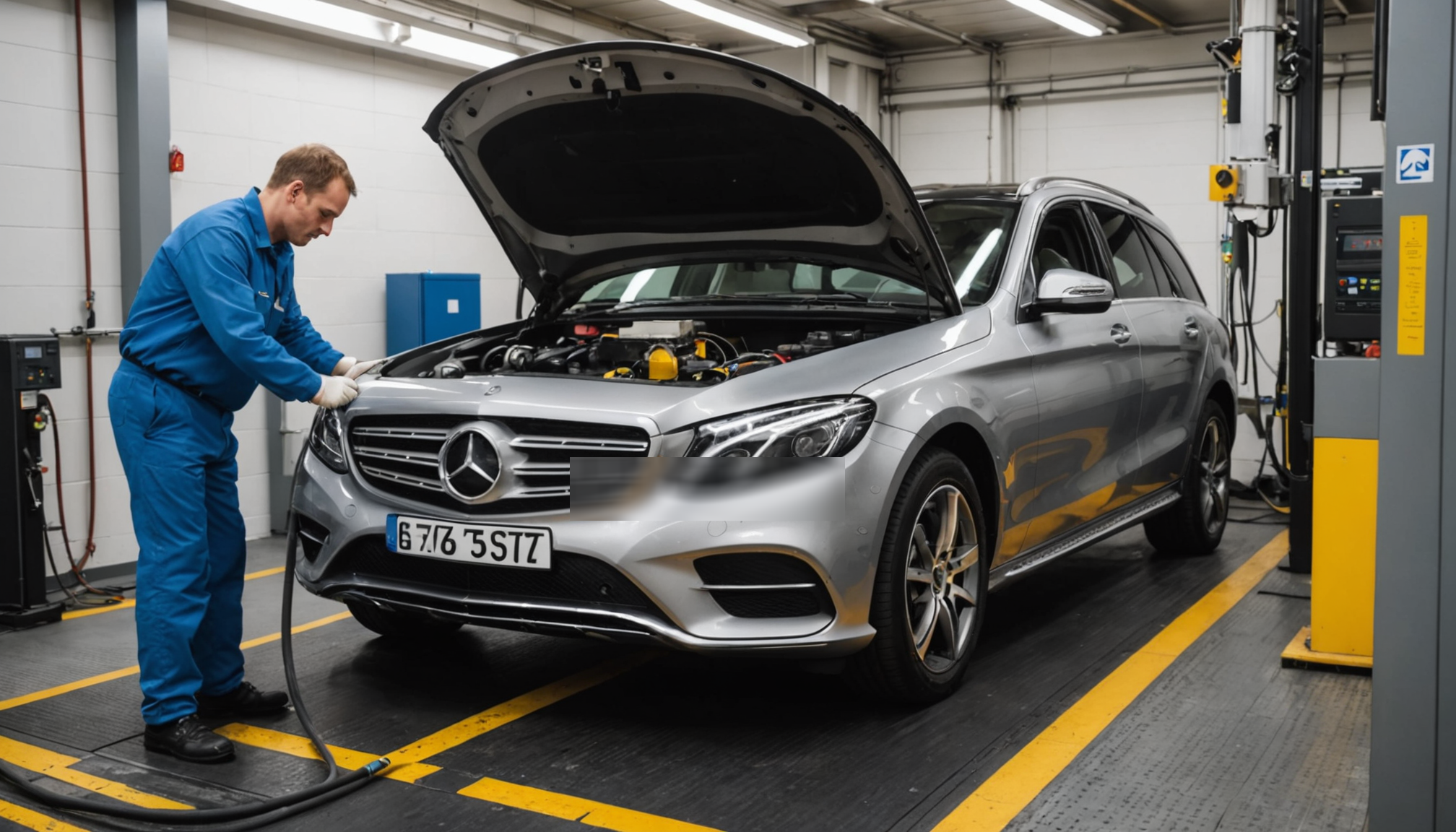
In May 2018, the DVSA introduced stricter diesel emissions testing as part of the MOT. The key change was the smoke opacity limit — the amount of visible particulate matter in the exhaust — which was tightened significantly. A car that would have passed the smoke test in 2017 can fail in 2025 because the limits are now substantially lower. For Euro 5 and Euro 6 Mercedes diesels, the smoke limit depends on the plate value (the manufacturer's stated smoke coefficient, printed on the VIN plate). If the plate value is not present — which is common on older cars — a default limit of 1.5 m-1 (per metre of smoke opacity) applies, which is very tight for a diesel engine with any level of carbon build-up. The test is conducted at idle and at a fast idle (approximately 2,500 RPM) with the engine fully warm. A cold engine will produce more smoke and is more likely to fail.
2. The most common causes of excessive smoke
A healthy Mercedes diesel with a functioning DPF should produce virtually no visible smoke. If your car fails the smoke test, one of these is usually the cause. DPF removed or internally gutted: this is the single biggest cause. A car with its DPF removed will fail the smoke test and the visual inspection (the tester will see the DPF canister has been tampered with). A new DPF costs £1,000–£1,800. DPF cracked or damaged: a cracked DPF substrate allows soot to bypass the filter. Professional cleaning cannot fix a cracked DPF — it needs replacement. Faulty injector: an injector over-fuelling one cylinder produces black smoke and can damage the DPF. Individual injector replacement: £350–£500. Turbo leaking oil into the exhaust: oil burning in the exhaust produces blue-white smoke and increases particulate count. Turbo replacement: £800–£1,400. EGR valve stuck open: causes incomplete combustion and increased smoke. Cleaning or replacement: £200–£500. The engine was tested cold: a cold diesel engine produces more smoke. Always insist the tester warms the engine thoroughly before the smoke test — this is a DVSA requirement but is sometimes skipped.
3. Pre-MOT diesel routine
To give your Mercedes diesel the best chance of passing the emissions test, follow this routine before the MOT: take the car for a 20–30 minute motorway drive at sustained speed (60–70 mph) immediately before the test. This raises the exhaust temperature enough for passive DPF regeneration and burns off accumulated soot. Check that the engine reaches and maintains normal operating temperature — a thermostat stuck open will keep the engine cool and increase smoke. Ensure the AdBlue system is functioning (no warning lights) — an AdBlue fault can affect combustion parameters. Use premium diesel (Shell V-Power, BP Ultimate) for the tank before the MOT — the higher cetane rating and detergent additives can reduce smoke marginally. Do not use diesel additives or "smoke stopper" products — they can contaminate the DPF and NOx sensors, making the problem worse.
4. If you fail: what happens next
You have 10 working days to get the car retested. The retest is free at the original test station if the car is returned within 10 days. During this period, you can legally drive the car to and from a repair garage and to the retest. Do not attempt to "clear" the fault by disconnecting the battery or using a generic scanner — the emissions problem is mechanical, and it will still be present at the retest. Book the car into a Mercedes specialist for a proper diagnosis. The diagnostic will identify whether the smoke is from a DPF issue, an injector fault, or turbo oil leakage. Once the fault is repaired, a pre-MOT emissions check can be performed to confirm the smoke is within limits before the official retest.