Mercedes Check Engine Light: The 12 Most Common Causes & What Each One Costs to Fix
A check engine light on a Mercedes can mean anything from a loose fuel cap to a failing timing chain. Here is the complete guide to what each fault code means and what it costs to put right.
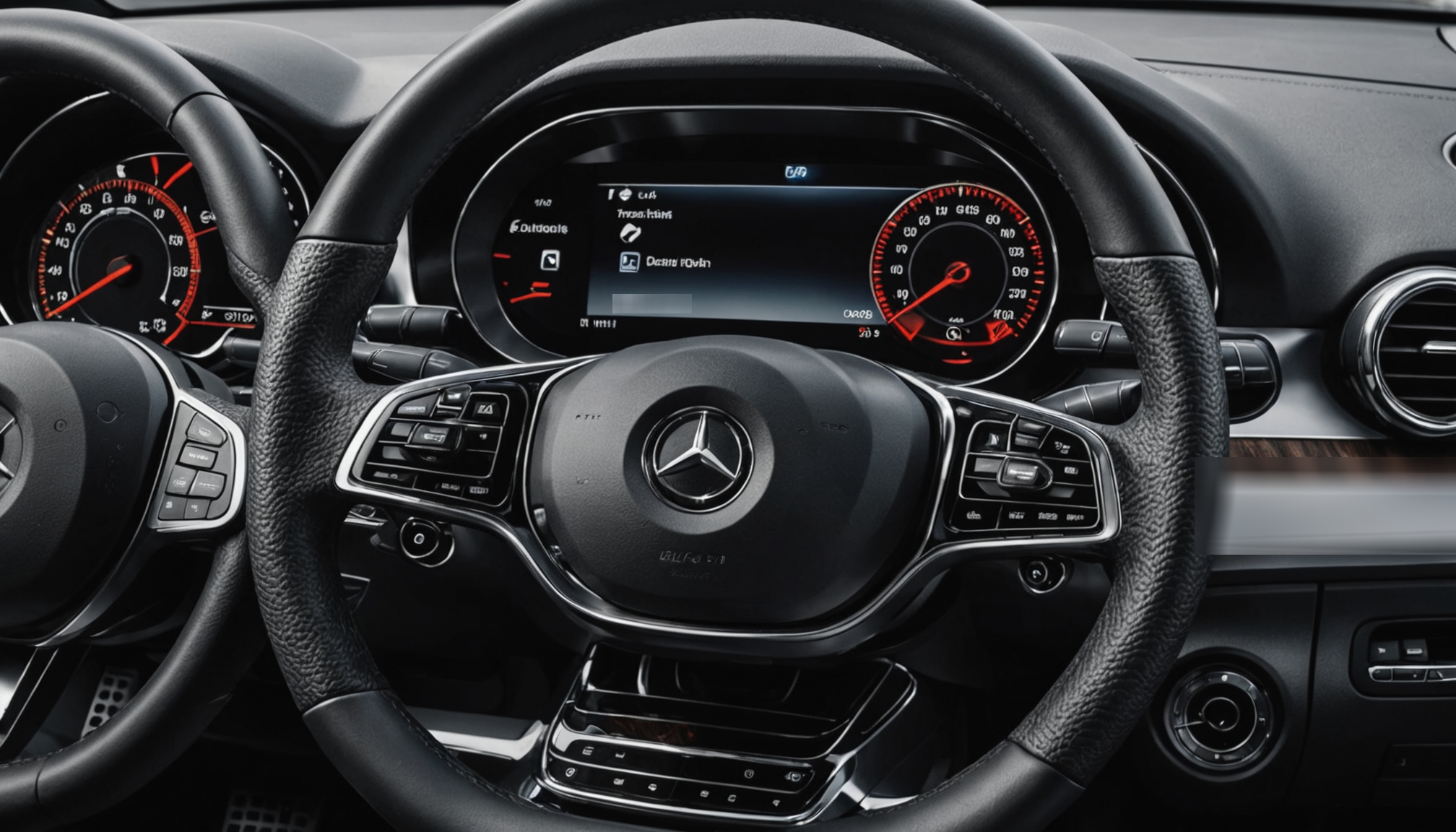
The check engine light: do not panic, do not ignore
The check engine light — officially the Malfunction Indicator Lamp (MIL) — illuminates when the engine management system detects a fault that affects emissions or engine operation. A flashing MIL means the fault is severe enough to potentially damage the catalytic converter and you should stop driving as soon as it is safe to do so. A steady MIL means the fault is present but not immediately damaging — you can continue driving but should have it diagnosed promptly. The difference is the difference between a £100 repair and a £2,000 repair. A generic OBD2 scanner can read basic codes, but only Xentry/Star can access the full Mercedes-specific fault code set, live data, and guided fault-finding trees. A "P0420 — catalyst efficiency below threshold" on a generic scanner could mean a failing catalytic converter (£1,200), a leaking exhaust (£100), or a failing oxygen sensor (£200). Xentry tells you which one it actually is.
1. Oxygen (lambda) sensor failure
The most common single cause of a check engine light on older Mercedes petrol engines. Oxygen sensors measure the oxygen content in the exhaust and allow the ECU to adjust the air-fuel mixture. A failing sensor causes increased fuel consumption, rough idle, and ultimately a rich mixture that damages the catalytic converter. A genuine Bosch or Mercedes sensor costs £120–£200, and replacement takes 30–60 minutes. There are typically two or four sensors per car (pre-cat and post-cat). Symptoms: fuel consumption noticeably worse, slight hesitation, code P0130–P0167 range.
2. NOx sensor failure (diesel)
One of the most common diesel Mercedes faults of the last decade. NOx sensors monitor the SCR catalyst efficiency for the AdBlue system. When they fail — showing implausible values — the check engine light illuminates and the AdBlue countdown may begin. A genuine NOx sensor costs £250–£400 and requires coding to the ECU on Xentry. There are typically two sensors: one before the SCR catalyst and one after. The downstream sensor fails more often because it is exposed to higher temperatures. Do not replace both unless both have failed — Xentry can identify which one is faulty.
3. Glow plug and glow plug relay failure (diesel)
Glow plugs preheat the combustion chambers for cold starts. On OM651 and OM642 diesel engines, individual glow plugs can fail, causing hard starting in cold weather and a check engine light. The glow plug relay module can also fail, affecting all four or six glow plugs simultaneously. Individual glow plug replacement: £30–£60 per plug plus labour (some are accessible, others require intake manifold removal for access — the labour cost varies dramatically). Glow plug relay: £120–£180. Diagnosing whether it is the relay or an individual plug requires testing for power at each glow plug during a cold start sequence.
4. Camshaft/crankshaft correlation fault
This fault code (P0016, P0017 or Mercedes-specific equivalents) indicates that the camshaft and crankshaft are not synchronised — which almost always means the timing chain has stretched. This is the most serious cause of a check engine light and should never be ignored. On M271, M270, M274, OM651, and M272 engines, a correlation fault means the chain has stretched beyond the tensioner's ability to compensate. If caught early, the chain can be replaced before it jumps teeth (£1,200–£1,800). If ignored, the chain can skip teeth and cause valve-to-piston contact, destroying the engine. This code should always be investigated the same day it appears.
5. EGR valve and cooler faults
The Exhaust Gas Recirculation system reduces NOx emissions by recirculating a portion of exhaust gas back into the intake. The EGR valve can stick open or closed due to carbon build-up, and on OM642 engines the EGR cooler can leak internally (causing coolant loss). Symptoms: rough idle, hesitation, increased emissions, coolant loss (cooler leak). EGR valve cleaning or replacement: £200–£500. EGR cooler replacement on OM642: £600–£900. Prevention: regular motorway runs that bring the engine to full operating temperature help burn off EGR deposits.
6. DPF differential pressure sensor
The differential pressure sensor measures the pressure drop across the DPF to calculate soot loading. When it fails — typically giving implausible readings — the car may attempt unnecessary regenerations or fail to regenerate when needed. A new sensor costs £80–£150 and is usually accessible without major disassembly. This is a common misdiagnosis: a faulty sensor can produce the same DPF warning as a genuinely blocked DPF. Always check the sensor readings on Xentry before condemning the DPF itself.
7. Ignition coil and spark plug failure (petrol)
On M271, M274, M276, and M278 petrol engines, individual ignition coils can fail, causing a misfire on the affected cylinder. The misfire triggers a flashing check engine light (severe — potential catalyst damage). A single coil pack costs £50–£100, and replacement is straightforward on most engines (some V6 and V8 engines require intake manifold removal for rear-bank coil access). Spark plugs should be replaced with the coils if they are due. Left untreated, a misfire dumps unburnt fuel into the catalytic converter, which can destroy the catalyst (£1,200–£2,500).
8. Mass Airflow Sensor (MAF)
The MAF sensor measures incoming air volume and temperature. When it fails — usually due to contamination from a poorly-fitted or overdue air filter — the ECU receives incorrect air mass data and the engine runs rich or lean. Symptoms: poor throttle response, rough idle, black smoke from the exhaust (diesel), increased fuel consumption. A genuine Bosch MAF sensor costs £120–£250 and replacement takes 15–30 minutes. Cleaning a MAF sensor with specialist spray is sometimes effective but usually temporary. The air filter should be checked and replaced if contaminated.
9. Turbo actuator and boost leaks
Mercedes diesel engines use variable-geometry turbochargers with an electronic actuator that adjusts the turbo vanes. The actuator can fail (electrical fault) or the vanes can stick (carbon build-up). Symptoms: loss of power, "boost pressure — deviation" fault codes, whistling noise from the turbo area. A split or loose boost hose produces similar symptoms but costs far less to fix. A proper diagnosis checks the actuator for correct movement on Xentry live data, then smoke-tests the intake system for leaks. Turbo actuator replacement: £300–£600. Stuck vanes can sometimes be freed with a chemical clean; a new turbo costs £800–£1,400.
10. Loose or missing fuel cap
The simplest and cheapest cause of a check engine light. A loose, missing, or damaged fuel filler cap allows fuel vapour to escape, which the evaporative emissions system detects as a leak. The code is typically P0455 or P0457. Tighten the cap and drive for a few cycles — the light will clear automatically if this was the cause. A new genuine Mercedes fuel cap costs £25–£40.
11. Thermostat failure
A thermostat stuck open causes the engine to run below operating temperature. The ECU detects that the engine is not reaching the expected temperature within a specified time and triggers a check engine light with a thermostat-related code. Symptoms: temperature gauge never reaches the midpoint, heater output weak in cold weather, slightly increased fuel consumption (because the ECU enriches the mixture). A genuine thermostat costs £40–£80 and replacement takes 30–60 minutes on most engines.
12. The diagnostic charge: why it pays for itself
A proper Mercedes diagnostic session on Xentry costs £85–£120 at an independent specialist. It reads every control unit in the car, accesses live data, and provides guided fault-finding. The diagnostic charge is typically credited against any repair you authorise. This is not an upsell — it is the difference between replacing the right component the first time and replacing parts on a hunch until the light goes out. If your check engine light is on and you do not know why, book a diagnostic. The cost is almost always less than the cost of replacing the wrong part.