Mercedes Wheel Alignment: Why It Matters More Than You Think & What a Proper Alignment Actually Costs
A Mercedes has more adjustment points than most cars and will chew through a set of £800 tyres in 5,000 miles if the alignment is wrong. Here is what a proper Mercedes alignment involves, why generic tyre-shop alignments fail, and when you should have yours checked.
Why Mercedes alignment is not a generic job
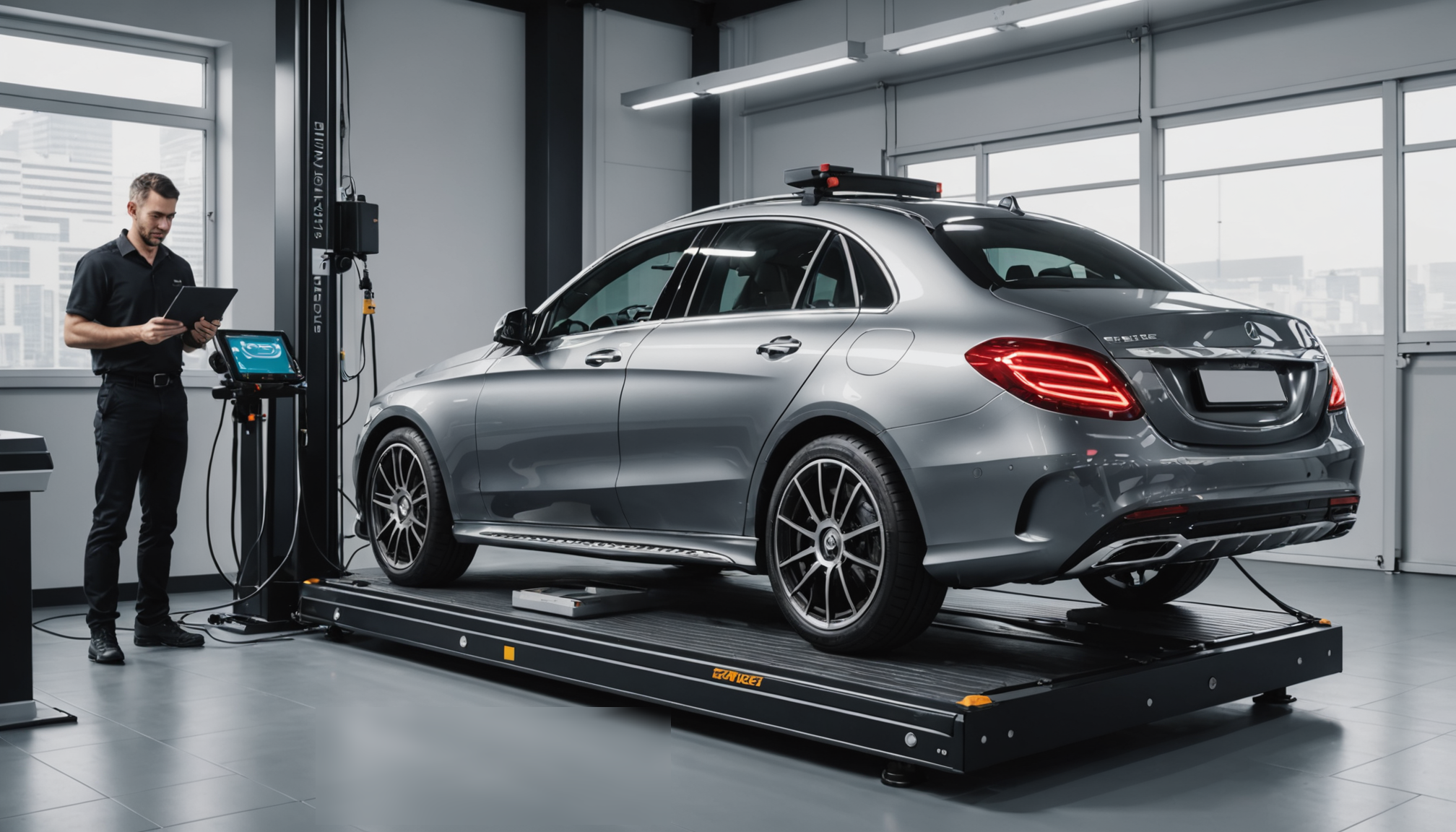
A modern Mercedes — particularly models with multi-link rear suspension like the C-Class (W204/W205), E-Class (W212/W213), and S-Class — has more adjustment points than a typical family car. The front suspension typically adjusts for toe and sometimes camber, while the rear multi-link setup can adjust toe, camber, and in some cases caster. When you take your Mercedes to a generic tyre-fitting chain for "four-wheel alignment," what you typically get is a front toe adjustment — and that is it. The rear axle is often not adjusted at all, either because the equipment does not support it or because the technician assumes the rear is fixed. A Mercedes with correctly adjusted front toe but incorrect rear toe will drive straight but wear its rear tyres unevenly — and you will not notice until the inner edge of the tyre is down to the cords. A proper Mercedes alignment is done on a Hunter or Beissbarth alignment rig by a technician who knows which adjusters exist on your specific model, how to access them, and what the target values should be. This is not snobbery — it is genuinely more complex than a Toyota Yaris.
Symptoms that your Mercedes needs alignment
The most common sign is uneven tyre wear — particularly feathering on the outer or inner edges. On Mercedes rear tyres, inner-edge wear is the classic symptom of excessive rear toe-out, often caused by pothole impacts that knock the adjustment out of specification. Other symptoms include: the steering wheel being off-centre when driving straight (typically a front toe issue), the car pulling to one side (can be alignment, tyre pressure, or a dragging brake), vague or wandering steering, and increased road noise from the tyres. Less obvious symptoms include reduced fuel economy (misaligned wheels increase rolling resistance) and ESP intervention that seems to trigger more often than it should — the ESP system compares steering angle to actual yaw rate, and if the car is crabbing slightly due to misalignment, the ESP can misinterpret that as instability. If you have just had suspension work — new control arms, new track rod ends, new springs or dampers — you must have the alignment done afterwards. Any suspension component replacement changes the geometry, and driving without realignment will destroy your tyres.
What a proper four-wheel alignment includes
A proper Mercedes alignment starts with checking tyre pressures and condition — an alignment on under-inflated or unevenly worn tyres is meaningless. The car is placed on the alignment rig and sensors are attached to all four wheels. The rig measures all geometry parameters: front and rear toe, front camber, rear camber, front caster (where adjustable), thrust angle, and steering axis inclination. The technician compares the readings to the Mercedes specification for your exact model. If any values are out of specification, adjustments are made — starting with the rear axle because rear toe affects the thrust angle, which provides the reference for front toe. On Mercedes models with eccentric adjuster bolts, penetrating oil may be needed because the adjusters seize with corrosion over time. If an adjuster cannot be moved, it must be replaced — this is common on older cars and a good garage will tell you before starting rather than presenting you with a surprise bill. Once all adjustments are within specification, a printout of the before-and-after values is provided. The entire job takes 45–75 minutes. Cost at an independent specialist: £60–£90 for a full four-wheel alignment. At a main dealer: £120–£200.
How to tell a good alignment shop from a bad one
A good alignment shop will: give you a printed report showing before and after values for every parameter on every wheel; explain which values were out and what they adjusted; ask about recent suspension work; and tell you in advance if an adjuster is seized and needs replacement. A bad alignment shop will: adjust only the front toe and call it done; not provide a printout; claim the rear axle is not adjustable when it actually is; or do the alignment without first checking tyre pressures and condition. The simplest test: ask the shop what alignment rig they use. If they say "Hunter" or "Beissbarth" and can tell you the model, that is a good sign. If they say "we do it by eye" or "laser alignment" without specifying the equipment, be cautious. In London, the best alignment work we see comes from Mercedes specialists or high-end tyre shops that deal with performance cars. The additional cost over a generic chain is £20–£40 — roughly the cost of half a tyre.
How often should you check alignment
We recommend a full alignment check every 12 months or 12,000 miles, and immediately after any of the following: hitting a large pothole hard enough to feel through the steering wheel, any suspension component replacement (control arms, track rod ends, springs, dampers, top mounts), new tyres (so you start with a clean slate), or if you notice any of the symptoms described above. Alignment is not a "set and forget" job — London roads with their potholes, speed humps, and raised ironwork will knock your suspension out of alignment gradually over time. A £70 annual alignment check is far cheaper than replacing a set of £800 Continental or Michelin tyres at 8,000 miles because the inner edges are worn to the cords. If you have a 4MATIC model, alignment is even more important — incorrect geometry puts additional strain on the transfer case and front differential, which are expensive components. The cost of an alignment is the cheapest insurance policy your tyres and drivetrain will ever have.