Mercedes Oil Specifications: 229.51, 229.52, 229.71 — Which One Your Engine Needs & Why It Matters
Using the wrong engine oil in a modern Mercedes is the single most common cause of premature timing chain wear, DPF blockage, and AdBlue system failure. This guide explains exactly which MB-Approval your engine needs, what each specification actually means chemically, and how a £10/L saving on oil can lead to a £3,000 repair bill.
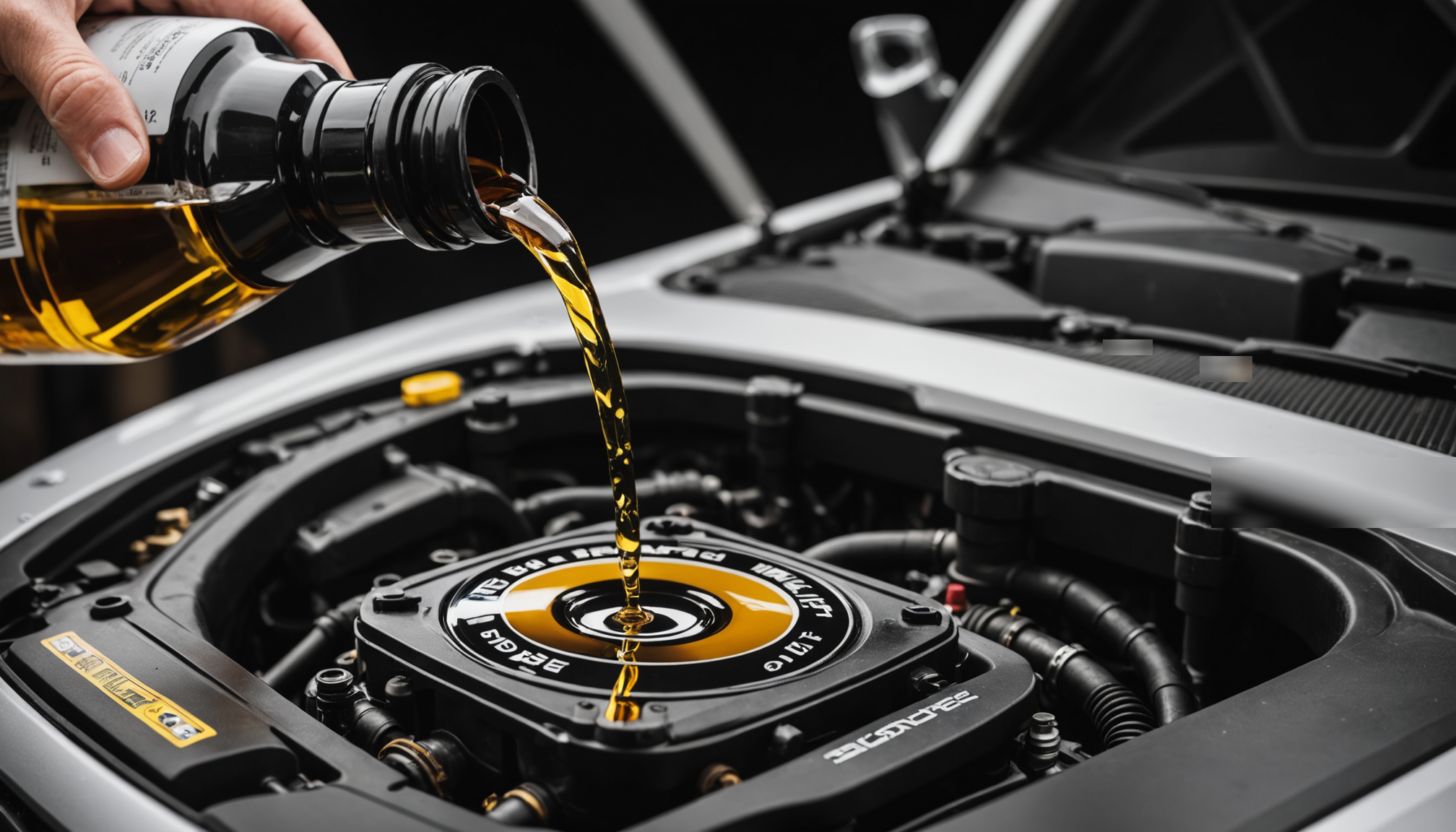
Why Mercedes oil specifications are not just marketing
Every Mercedes engine from the last 20 years requires oil that meets a specific MB-Approval — not just a viscosity like 5W-30, but a detailed chemical profile governing additive package, sulphated ash content, phosphorus levels, and high-temperature shear stability. These specifications exist because modern Mercedes engines operate with extremely tight tolerances and rely on specific oil chemistry to protect the timing chain, hydraulic valve lifters, turbocharger bearings, and — critically on diesel engines — the DPF and SCR emissions systems. The wrong oil will not cause your engine to seize tomorrow. But over 10,000–20,000 miles it will accelerate timing chain wear, increase ash loading in the DPF, and potentially poison the NOx sensors in your AdBlue system. We have seen all three in our workshop, and in every case the common denominator was non-approved oil used at a previous service. A £10 saving per litre of oil turns into a £2,000–£4,000 repair bill faster than most owners realise.
MB 229.51 — the mainstream long-life diesel specification
MB 229.51 is the most widely applicable specification for Mercedes diesel engines built from approximately 2005 onwards. It is a Low-SAPS oil — low Sulphated Ash, Phosphorus and Sulphur — designed to protect diesel particulate filters. The low ash content means fewer incombustible particles exit the combustion chamber and enter the DPF, which reduces ash loading and extends DPF service life. Typical viscosity is 5W-30, and the oil is approved for extended drain intervals up to 15,500 miles or 12 months under normal driving conditions. Compatible engines include the OM642 V6 diesel, OM651 four-cylinder diesel, OM646, OM629, and most pre-2017 diesel engines. When you buy 229.51 oil, look for the actual MB-Approval number on the bottle — not just a claim of "meets requirements." Genuine approved oils carry a number like MB-Approval 229.51 on the rear label and are listed on the official Mercedes-Benz operating fluids website. Common approved products include Shell Helix Ultra Professional AM-L 5W-30, Mobil 1 ESP 5W-30, and Petronas Syntium 5000 AV 5W-30.
MB 229.52 — improved fuel economy, backward compatible
MB 229.52 is essentially an evolution of 229.51 with a tighter chemistry profile and slightly better fuel economy. It is fully backward compatible with any engine that calls for 229.51. The key difference is that 229.52 oils typically have an even lower SAPS level and better high-temperature deposit control, which matters for engines that do a lot of short journeys where the oil rarely reaches full operating temperature. If your Mercedes diesel specifies 229.51, you can safely use 229.52. If the newer specification is available at the same price, it is the better choice. Common 229.52 oils include Mobil 1 ESP X2 0W-20 (also meets 229.71) and Petronas Syntium 7000 AV 0W-20. The switch to lower viscosity oils like 0W-20 under the 229.52 umbrella reflects a broader industry trend toward fuel efficiency, but it is important to note that not all 0W-20 oils meet 229.52 — you still need to check for the actual MB-Approval on the bottle.
MB 229.71 — the latest low-viscosity diesel specification
MB 229.71 is the newest specification, introduced for the latest-generation OM654 and OM656 diesel engines found in post-2016 C-Class, E-Class, GLC and S-Class models. It is a 0W-20 ultra-low-viscosity oil designed for engines with very tight bearing clearances. Do not substitute a heavier oil like 5W-30 into an engine that specifies 229.71. The hydraulic lash adjusters, variable valve timing solenoids, and camshaft phasers on these engines are calibrated for the specific flow characteristics of 0W-20 oil. Using a thicker oil increases oil pressure in ways the engine management system does not expect, which can lead to variable valve timing errors, rough idle, and long-term timing chain tensioner wear. The cost difference between 229.71 and older specifications is minimal — typically £5–£10 more for a full oil change. Common approved 229.71 oils include Mobil 1 ESP X2 0W-20, Shell Helix Ultra ECT C5 0W-20, and genuine Mercedes-Benz 229.71 oil. At our workshop, we stock all three specifications and match them to your exact engine via your VIN.
Petrol engine specifications: 229.5, 229.6 and beyond
Petrol Mercedes engines — M271, M274, M276, M177 — use different specifications because they do not carry DPFs and therefore do not need Low-SAPS chemistry. The main petrol specifications are MB 229.5 (5W-40 full synthetic, for most pre-2018 petrol engines), MB 229.6 (5W-30, improved fuel economy), and the very latest MB 229.71 or 229.72 (0W-20 for M254, M256 and M177 engines from 2019 onwards). The general rule: older petrol engines (pre-2014) are happiest on MB 229.5 5W-40. Newer turbo petrol engines from the M274/M276 era run on MB 229.6 5W-30. The very latest M254/M256 mild-hybrid engines require the low-viscosity MB 229.71 or 229.72 0W-20 specification. If you are unsure, look under the bonnet at the oil filler cap — many Mercedes have the MB-Approval stamped there. Alternatively, any Mercedes specialist with Xentry can look up the correct specification from your VIN in under 30 seconds.
What happens when the wrong oil is used: three real workshop cases
Case 1: A 2014 E220d (OM651) arrived with a stretched timing chain at 82,000 miles. The owner had been servicing the car at a general garage that used bulk 5W-30 oil — not MB-approved. The oil did not have the correct anti-wear additive package, and the timing chain stretched to the point where the tensioner could no longer compensate. Repair cost: £1,800. Case 2: A 2017 GLC 250d (OM654) came in with a blocked DPF at 55,000 miles. Analysis showed the ash loading was almost double what it should have been for the mileage. The previous service had used standard 5W-30 instead of MB 229.71 0W-20. The higher ash content from the non-approved oil had accelerated DPF loading. The DPF could not be cleaned and required replacement. Cost: £1,400. Case 3: A 2019 C300 (M264 petrol) developed variable valve timing faults at 38,000 miles. A general garage had used 5W-40 when the engine required MB 229.71 0W-20. The thicker oil confused the camshaft phasers and triggered "Camshaft position sensor — correlation error" fault codes. Once the correct oil was installed and the adaptations were reset on Xentry, the fault cleared. The owner was lucky — permanent damage was avoided, but it cost them a second oil change and diagnostic fee. The pattern is clear: using non-approved oil does not always cause immediate failure, but it accelerates wear in the most expensive components.
How to verify your car has the right oil after a service
After any service, you should receive an invoice that lists the exact oil used — brand, viscosity, and MB-Approval number. If the invoice simply says "engine oil" or "5W-30", ask for the specification. A reputable Mercedes specialist will be happy to tell you what went into your engine. You can also check: the oil filler cap may have the specification stamped on it. Alternatively, any workshop with Xentry can check your engine code and cross-reference the correct oil in under a minute. If you are buying a used Mercedes, ask the seller for service invoices — not just stamps in the book — and check what oil was used. If the car was serviced at a general garage using bulk oil, budget for an immediate oil and filter change with the correct specification. It is the cheapest insurance policy you can buy for your engine.